












2026.01.19
[観光情報]
Digging deeper into the history of Yamanashi’s local dish, “Hoto”! A traditional taste that has been passed down since the Sengoku period
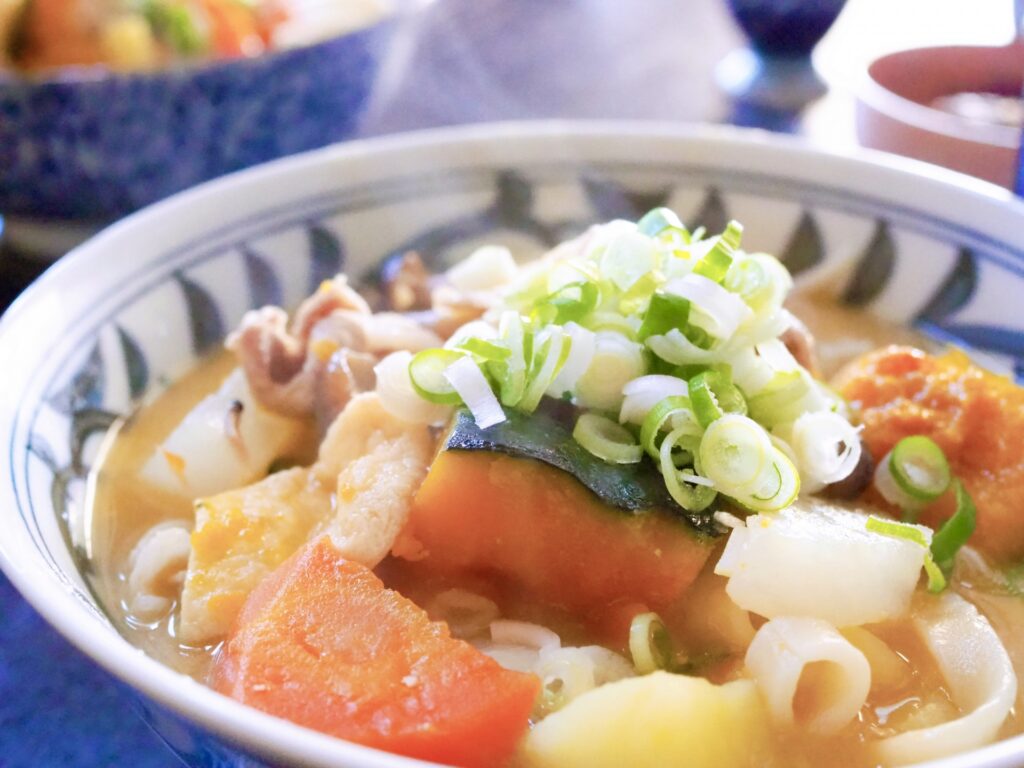
Hoto is a local dish that you’ll want to try when visiting Yamanashi. This time, we’ll unravel the history of how and when hoto was created, and why it has become so beloved by the people of Yamanashi! It’s well-known that it was a food eaten during the campaigns of Takeda Shingen, but there are also theories that its roots date back even further. By learning about how hoto has changed over the years, from the Warring States period to the present day, we hope to bring you discoveries that will make your next bowl of hoto even more delicious.
A journey to unravel the history of Yamanashi’s Hoto
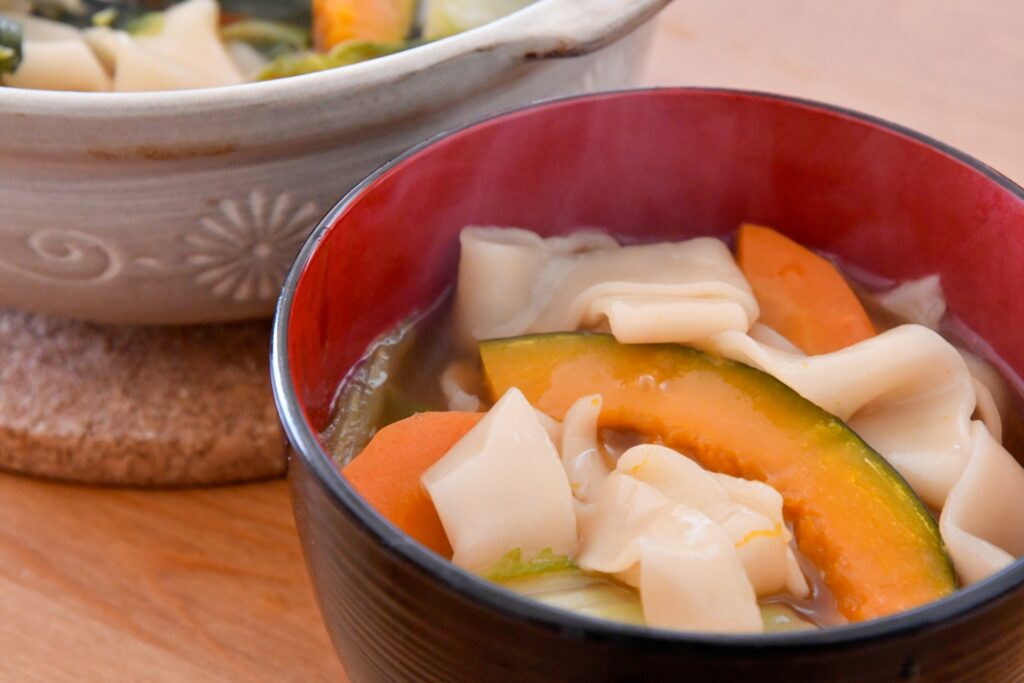
Hoto is an essential part of Yamanashi’s food culture. This local dish, made by simmering wide noodles in a miso-based broth with pumpkin and other vegetables, has been loved by many people for a long time. Here, we will explore the basics of hoto and why it has become so deeply rooted in the hearts of the people of Yamanashi.
What is Hoto? Learn the basics
Hoto is a typical local dish from Yamanashi Prefecture, made with wide, flat noodles kneaded from wheat flour, simmered in a miso-flavored broth with pumpkin, mushrooms, seasonal vegetables, etc. Unlike udon, the main feature of houtou is that no salt is used when making the noodles, and the dough is simmered raw without being left to rest. This allows the wheat flour dissolved from the noodles to thicken the broth, which keeps the broth fresh and creates a mellow flavor.
| project | content |
|---|---|
| noodles | Wide, flat noodles made without salt and simmered raw with vegetables. |
| juice | It is basically made with miso, and the broth is often made with dried sardines. The pumpkin melts into the soup, adding a natural thickness and sweetness. |
| Ingredients | Pumpkin is an essential ingredient, and other seasonal vegetables such as carrots, taro, mushrooms, and Chinese cabbage are used in abundance. |
Why is it loved as a local Yamanashi dish?
Geographical factors play a major role in why houtou has taken such deep roots in Yamanashi. Because the mountainous terrain meant there was little land suitable for growing rice, people grew wheat, which is easy to cultivate, instead of rice, as their daily staple. Hoto, as a dish made with wheat, was at the heart of daily diets and was an integral part of people’s lives.
Hoto, which is packed with vegetables, highly nutritious, and warms the body from the inside out, has also supported people’s lives in practical ways. The ease of preparing it by simmering noodles and vegetables is one of the reasons it was a popular meal to have between busy farm work. It is often eaten around a large pot at family and community gatherings, and it has also played a role in deepening bonds between people. In 2007, it was selected as one of the “100 Best Local Dishes of Rural Areas” by the Ministry of Agriculture, Forestry and Fisheries.
Exploring the roots of Hoto from ancient times to the Middle Ages
Hoto is a beloved Yamanashi delicacy, but if you trace its history, you’ll find a magnificent story hidden that may even date back to ancient China, even before the Warring States period. Let’s explore the origins of houtou.
The origin of noodle dishes from China
The most popular theory about the origin of the name “hoto” is that it is a variation of the word “hakutaku,” which was introduced from China. Hakutaku was a dish eaten during the Tang dynasty, made by kneading wheat flour, flattening it, and simmering it in soup, and is thought to be the prototype of modern-day houtou. This cooking method is said to have been introduced by envoys and monks who traveled from Japan to Tang China between the Nara and Heian periods.
The relationship between Hakutaku and Hoto in the Heian period
One of the oldest records of hakutaku in Japan dates back to the Heian period. It appears in Sei Shonagon’s The Pillow Book, where it is described as “hautau,” suggesting that it was eaten by the aristocracy of the time. At that time, it was not yet considered a local Yamanashi dish, but rather a special dish enjoyed by a select few in the capital. Over the years, as it spread throughout Japan, it is thought to have evolved in its own way to suit the climate and environment of Yamanashi, eventually becoming the houtou we know today. Theories about the origins of houtou are summarized in the table below.
| theory | era | Origin | Features |
|---|---|---|---|
| Hakutaku theory | Nara to Heian period | China (Tang Dynasty) | A noodle dish made by kneading wheat flour, flattening it, and simmering it. |
| Changes to Hoto | Kamakura to Muromachi period and beyond | Within Japan | It has evolved in a unique way to suit the climate and geography of Yamanashi (land unsuitable for rice cultivation), and has become established as an everyday food for the common people. |
Warlords and Yamanashi’s Hoto, which flourished during the Sengoku period
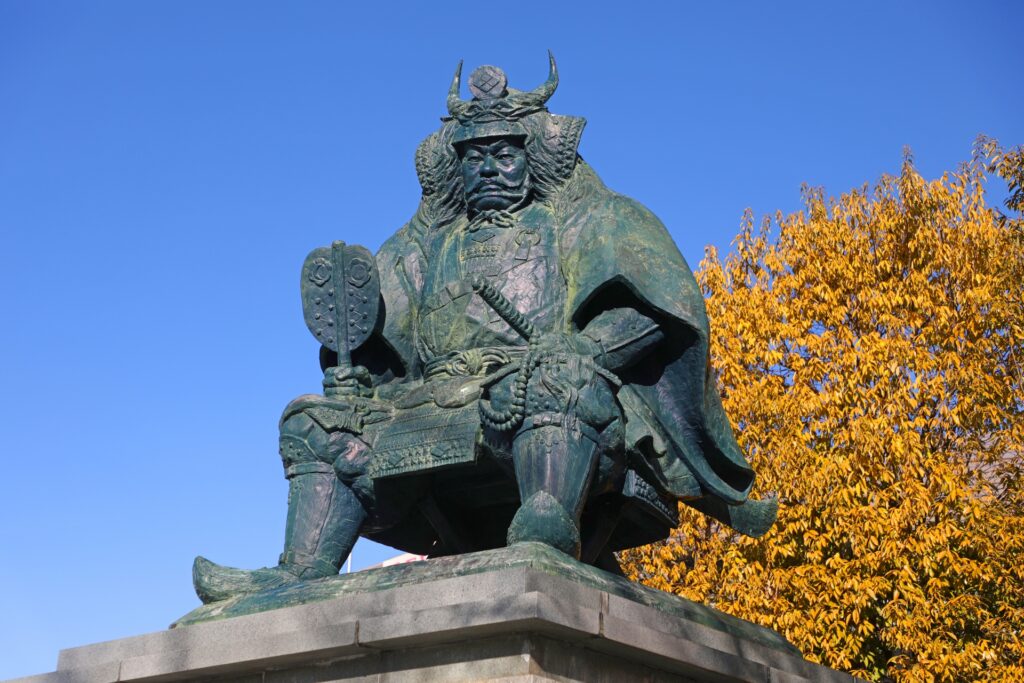
When talking about the history of houtou, it is essential to mention the warlords who ruled Kai Province, now Yamanashi Prefecture, during the Sengoku period. Here, we will focus in particular on the deep connection between Takeda Shingen and houtou, and look at how this dish became firmly rooted in the food culture of Kai Province.
The legend of Takeda Shingen and Hoto
When it comes to Yamanashi houtou, many people may think of the anecdote about Takeda Shingen, the hero of Kai Province. There are several interesting legends surrounding houtou.
Its role as food for Lord Shingen’s camp
The most famous legend is that houtou was eaten as “camp food” by the Takeda army. It is said to have been eaten as field food between battles. One version has been passed down that says it got its name from the fact that Lord Shingen used his own sword, or “hoto,” to finely chop the ingredients and simmer them, thus forming a powerful image of it as a military commander’s dish.
Excellent nutritional value as military rations
The reason why houtou was so highly valued as a camp food was its excellent nutritional value. Noodles made from wheat flour are a source of energy, and by adding plenty of seasonal vegetables such as pumpkin, you can also take in vitamins and minerals all at once. By simmering it in miso, you can also replenish the body-building protein, making it a truly balanced dish that can be completed in just one bowl. It is said that this convenience and high nutritional value made it ideal as a military ration to support the vitality of soldiers.
| ingredients | Key nutrients | Expected work |
|---|---|---|
| Noodles (wheat flour) | carbohydrates | It provides energy for moving the body |
| Pumpkins and vegetables | Vitamins and minerals | Toning your body |
| miso | Protein and isoflavones | It is the basis for building the body |
Established as a part of Kai Province’s food culture
The legend of Takeda Shingen is a very important factor when talking about the popularity of houtou. However, there was also another geographical reason why houtou took such deep roots in Kai Province. Kai Province had many mountainous areas where it was difficult to grow rice, so instead, wheat and buckwheat were cultivated vigorously, and a flour-based food culture developed. Hoto was born out of this and became a common food that could be made with easily available ingredients, and it spread widely among not only samurai but also common people, becoming firmly established as a part of Kai Province’s food culture.
From the Edo period to the present day: Hoto, a staple on the dining tables of ordinary people
After the Sengoku period, houtou spread from being a samurai dish to the everyday lives of ordinary people. Here, we will trace the history of houtou from the Edo period to the present day, and look at how it has taken root in people’s lives.
Hoto as seen in documents from the Edo period
Documents show that houtou was already known as a specialty of Kai Province during the Edo period. In the travel diary of the ascetic monk Noda Senkoin, “Nihon Kyuho Shugyo Nikki,” written in 1815 (Bunka 12), houtou appears as a “specialty” of Kai Province. Around this time, wheat cultivation became widespread in Yamanashi, where the mountainous region makes rice cultivation difficult, and houtou became a staple food that replaced rice and supported people’s diets. It is believed that the custom of eating houtou as a meal among the common people had become established.
Spread after the Meiji period and regional diversification
In the Meiji period, sericulture flourished in Yamanashi Prefecture. Silkworm farming was an important job for women, and hoto, which could be made quickly in between busy tasks, became increasingly popular. It was once considered an essential cooking skill for women, to the point that it was said that “if you couldn’t make hoto, you couldn’t marry off.”
From this time on, houtou developed in various ways depending on the region and household. The classic version is made with plenty of pumpkin to give it a sweet taste, but many variations were created.
| kinds | Features |
|---|---|
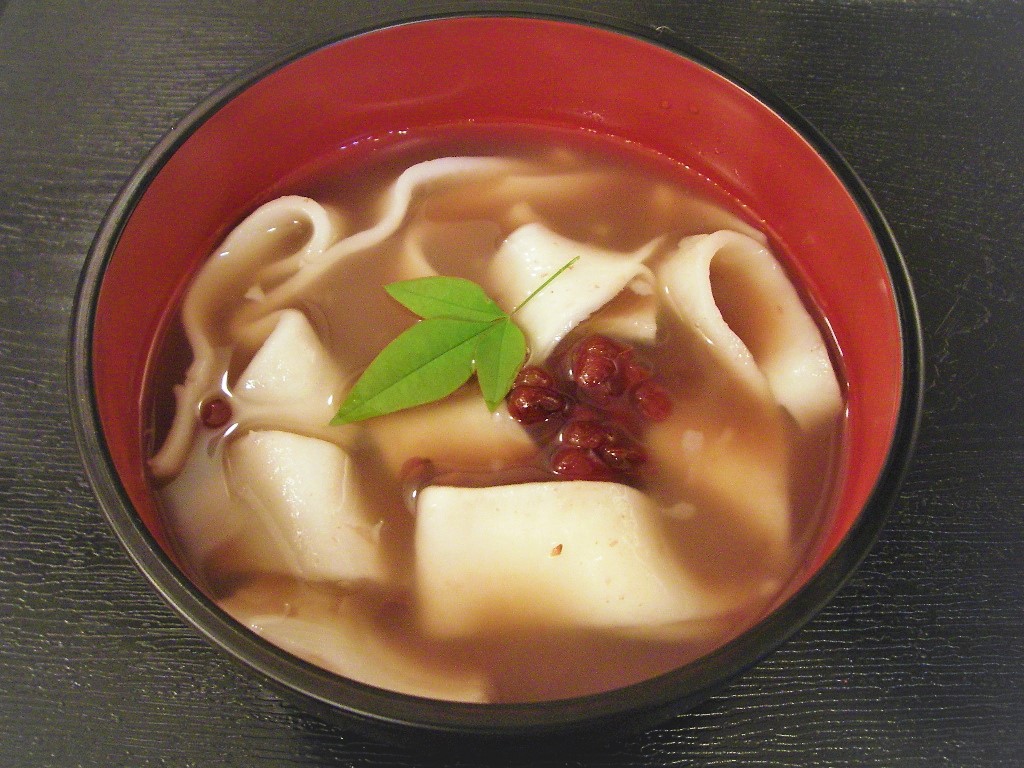
| Azuki bean pods | This dish uses red beans instead of pumpkin and is simmered in a sweet sauce. It is also called “Konabotou” and can be eaten like oshiru (sweet red bean soup). |
| Ozara | This is a summer dish where the same noodles as hoto are rinsed in cold water and served with a warm soy sauce-based broth. |
| Hoto with meat | From around the 1950s, more and more households began adding pork and chicken, and people began to enjoy a richer flavor. |
Hoto as a tourist resource in Yamanashi
Hoto, which was once a beloved home-cooked dish, evolved into a tourist destination after the war, representing Yamanashi Prefecture. In 2007, it was selected as one of the “Top 100 Local Dishes of Rural Areas” by the Ministry of Agriculture, Forestry and Fisheries, and its name became known nationwide. Today, there are numerous hoto specialty shops throughout the prefecture, each offering a bowl of hoto with unique miso and ingredients. Efforts are being made to preserve the culture of hoto as a local dish, with events such as the “Shosenkyo Hoto Taste Competition” held. Hoto, which began as a home-cooked dish, is now loved by many people as an important tourist resource that conveys Yamanashi’s food culture.
Recommended Hoto Restaurants in Kofu, the Hometown of Takeda Shingen!
Kofu, Yamanashi, is a historic castle town built by Takeda Shingen, a famous general of the Warring States period. It is said that Takeda Shingen ate hoto as a meal during his campaign, and the hoto culture has been passed down in this area since ancient times. This local flavor is still alive and well in people’s lives. Here we introduce three popular hoto restaurants in Kofu that you should definitely try!
Koshu Hoto Kosaku
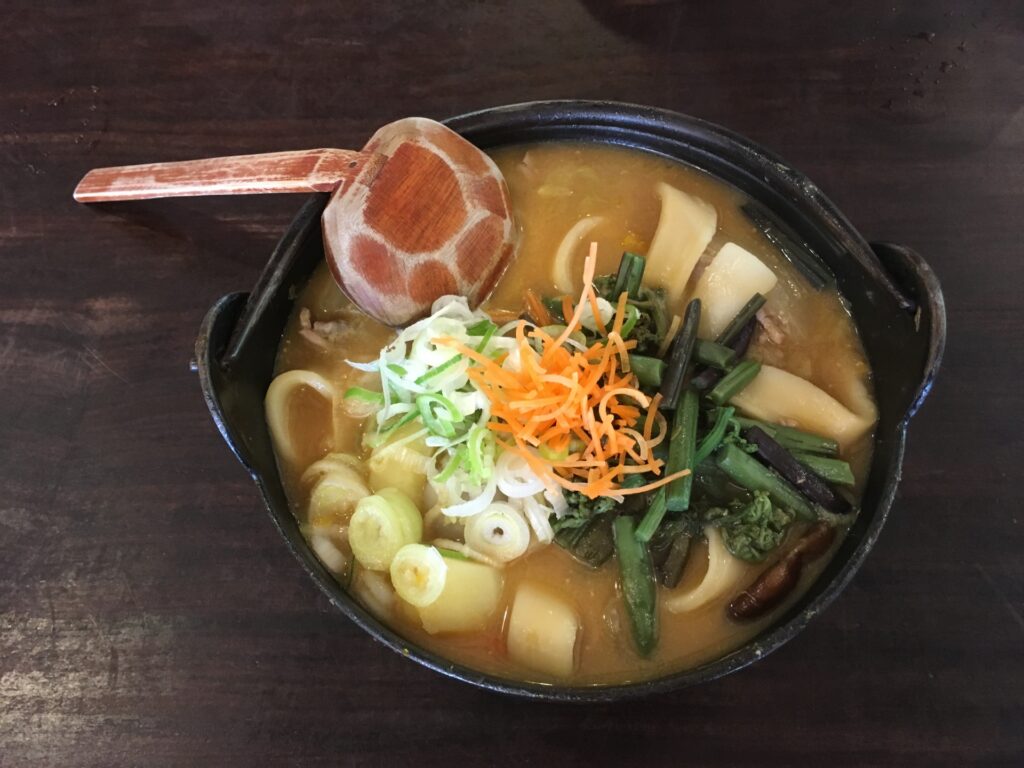
Koshu Hoto Kosaku, with multiple locations throughout Yamanashi Prefecture, is a long-standing favorite among locals. With over 50 years of history, it’s the place that many people associate with hoto. A bowl of noodles, crafted using the restaurant’s unique recipe and featuring a rich soup made with a unique miso and dashi broth, is truly unique. While the noodles are thick and firm, they retain their shape even after long simmering, offering a chewy texture and a smooth mouthfeel. With a total of nine locations, primarily within Yamanashi Prefecture, Kofu Station is conveniently located near both the north and south exits, making it easy to stop by during sightseeing or travel. For details on each location, please visit the Koshu Hoto Kosaku official website.
Reference/Source: Koshu Hoto Kosaku
Ozara and Hoto Chiyoda
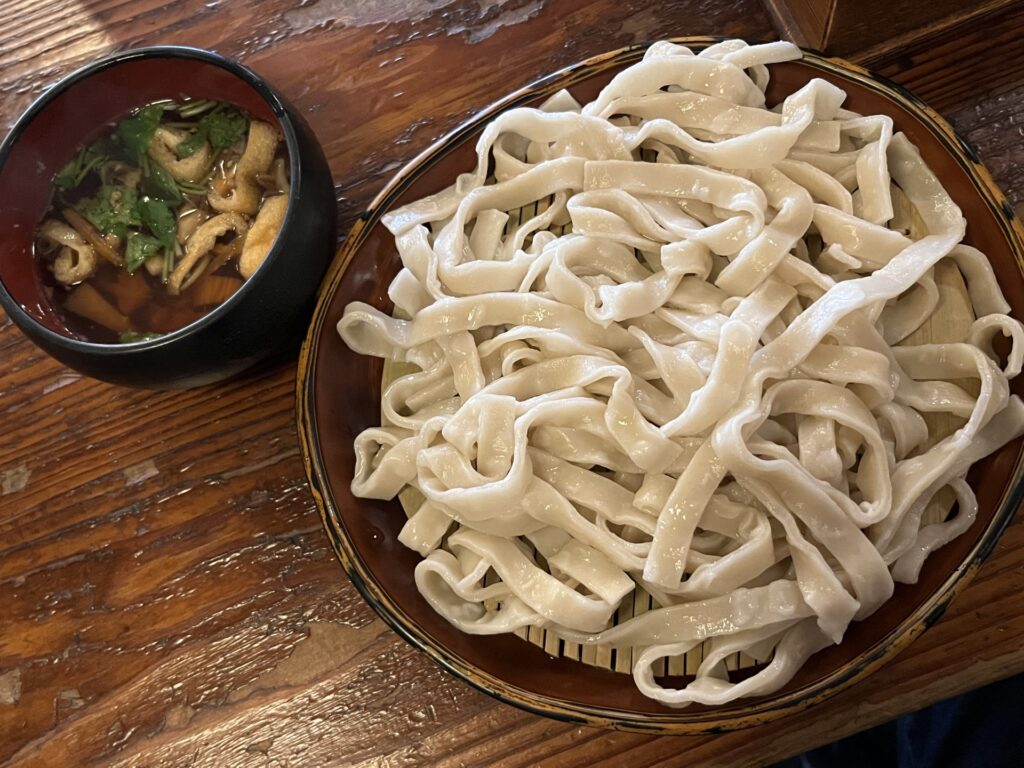
Located just a short walk from the south exit of Kofu Station, Chiyoda is a well-known restaurant that has been loved by locals for many years. Known as the originator of “Ozara,” a chilled hoto noodle dish, it has been preserving its flavor for 70 years. Ozara is a refreshing yet satisfying dish, with smooth cold noodles served in a warm dipping sauce rich in the flavor of bonito. It is especially delicious in the hot season. Of course, it is a winter staple! You can also enjoy hot hoto with plenty of vegetables, so it can be enjoyed in any season. Why not take your time to savor the gentle flavors that are unique to Kofu in the relaxed and calm atmosphere of the restaurant?
[Basic information]
Address: 2-4-8 Marunouchi, Kofu City, Yamanashi Prefecture
Business hours: 11:30-14:00, 18:00-20:00
Closed: Mondays
For more details, please check the official blog.
(Reference: “Ozara and Hoto Restaurant Chiyoda” Official Blog )
Toto
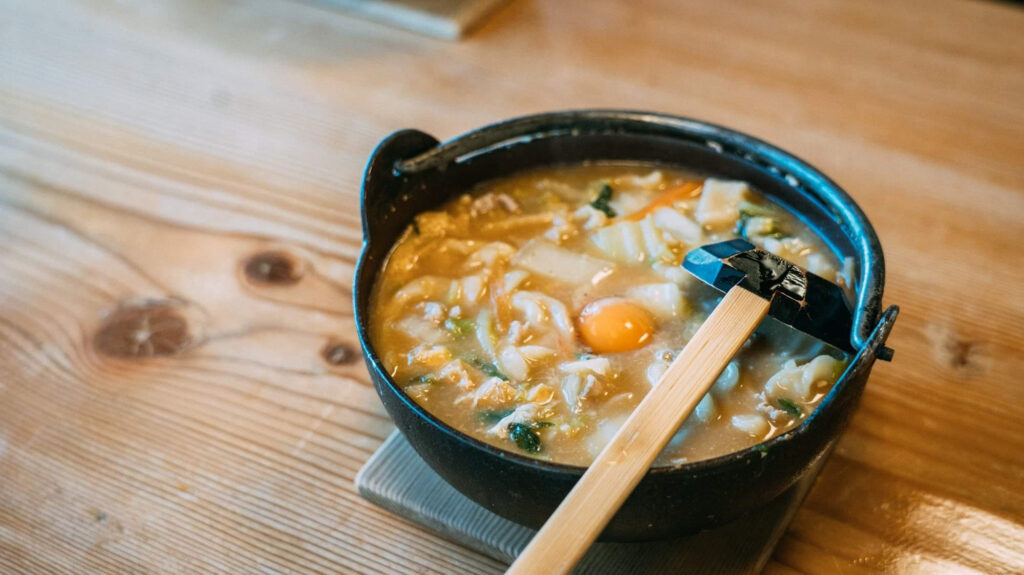
Within “Koedo Kofu Hanakoji” is Toto , a restaurant where you can eat houtou . This is a noteworthy restaurant that cherishes tradition while also promoting new appeal. The houtou is made using the techniques and experience handed down over many years, with no compromises made in the selection of ingredients, from the hand-made curly noodles to the miso, pork, and soup, making it a bowl that can only be enjoyed here. At lunchtime, you can enjoy the signature dishes of “hoto” and “shoyu katsudon,” as well as a set menu incorporating seasonal ingredients. This is the perfect place for a meal between sightseeing.
After enjoying your hoto, be sure to take a stroll through “Koedo Kofu Hanakoji.” The stone-paved alleys are lined with shops that evoke the atmosphere of Little Edo, creating a nostalgic feeling. This space with a Japanese feel is also popular as a photogenic spot, where you can take lots of wonderful photos to remember your trip. It’s also fun to stroll around and stop by any shops that catch your eye. Maizuru Castle Park, which is said to be the site of Kofu Castle, is also nearby, making this an area where you can really feel the history.
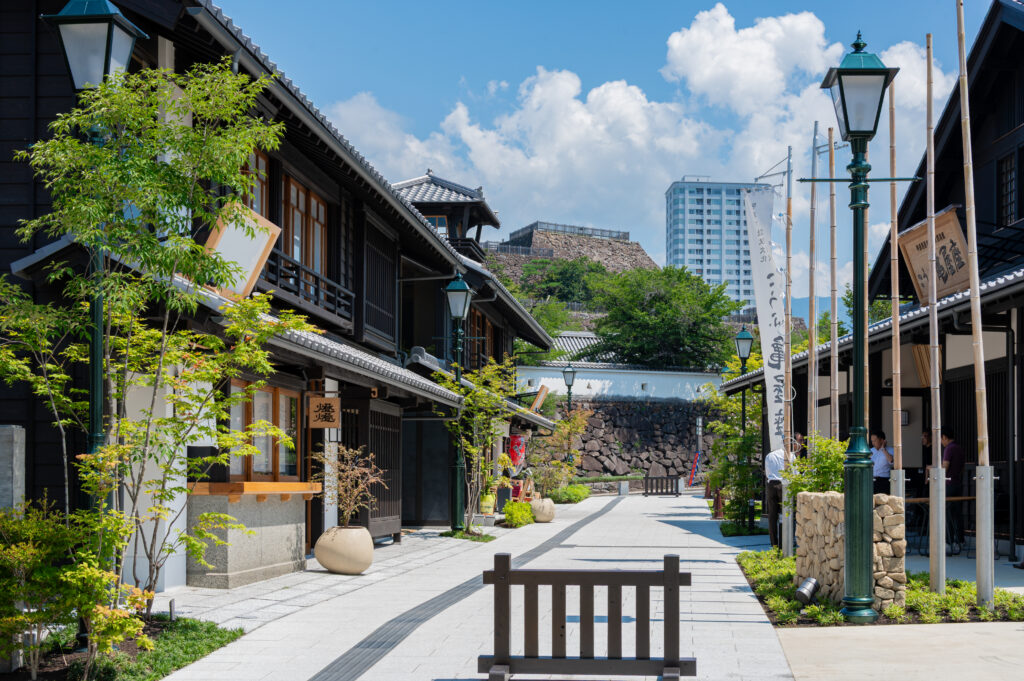
Kofu is a city rich in history, culture, and delicious local cuisine, and just walking around it is so relaxing that it will make you feel at ease. Visiting historical sites connected to Takeda Shingen, savoring a hearty bowl of hoto noodles, and enjoying the atmosphere of Little Edo will surely leave a fond memory of your trip.
When you visit Kofu, try walking around the city at your own pace and fully experience the unique charms of this area.
summary
We’ve traced the history of Yamanashi’s local dish, “hoto,” from various angles. Its roots are ancient, and one theory is that it originated from the noodle culture introduced from China. We can see that it has been passed down over the long course of time, gradually changing in form. During the Warring States period, it was linked to the wisdom of Takeda Shingen, and because of its long shelf life and high nutritional value, it was a staple food for people to survive in difficult times.
Hoto, which was nurtured in the rich nature and climate of Yamanashi, has now become a part of local life and a beloved home-cooked dish. The gentle flavor of the miso and plenty of vegetables is packed with nutrition, and just one bite seems to warm your soul. Especially in the bitterly cold winter months, a steaming bowl of hotto will warm you from the inside out. If you visit Yamanashi, be sure to try this warm bowl of hotto.
 LINEで送る
 シェア
シェア ポスト
ポスト